
UK's Trusted Foam Board Distributor
Supplying many of the leading Film & TV Companies, Architects & Design practices, Universities & Colleges across the UK
- Authorised & Trusted
- UK Family Business that Puts Customers First
- Fast UK Delivery & Expert Support


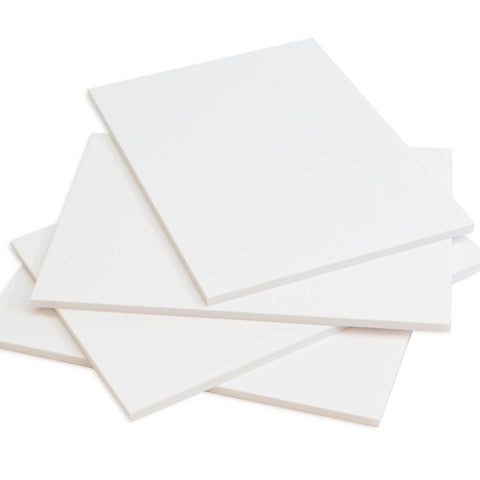
White Foam Board 5mm Professional Grade Indoor Display Board from Gilman Bros
On Sale from £18.60 (inc VAT)
Save up to 48%
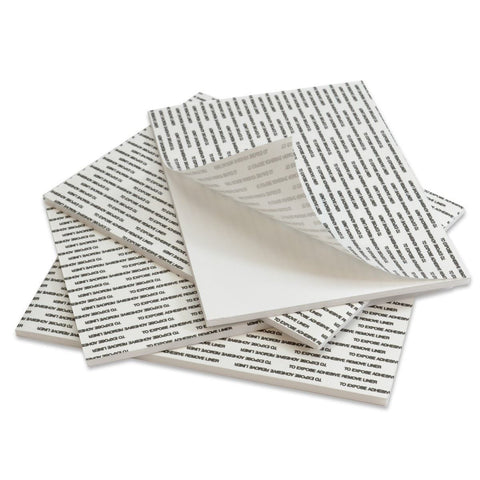
Self-Adhesive Foam Board 5mm Insite Reveal Peel and Stick Mounting Board from Gilman Bros
On Sale from £24.12 (inc VAT)
Save up to 40%
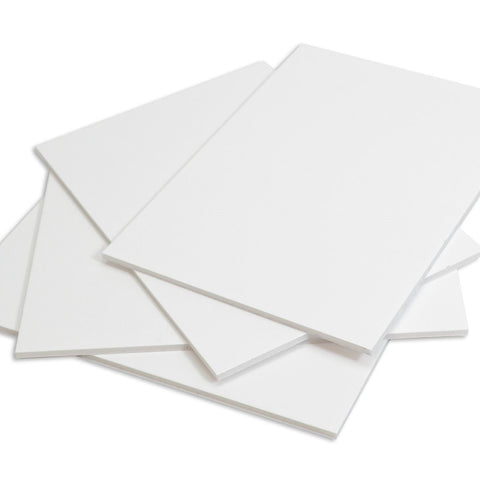
White Foam Board 3mm Professional Grade Indoor Display Board from Gilman Bros
On Sale from £23.40 (inc VAT)
Save up to 40%
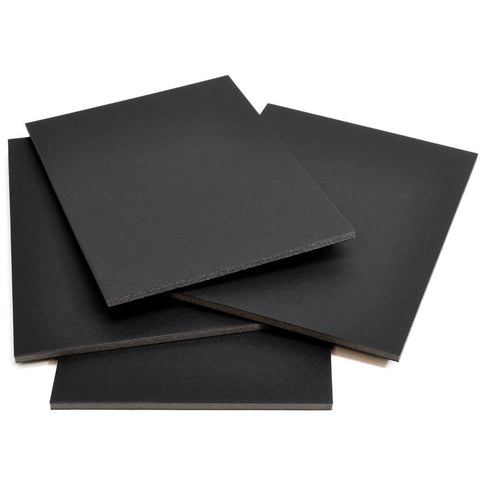
Black Foam Board 5mm Professional Grade Display Board from Gilman Bros
On Sale from £17.94 (inc VAT)
Save up to 48%


What foam board do Graphics Direct supply?
We supply foam board manufactured by Gilman Brothers, a globally recognised producer known for consistent quality and performance.
We do not supply low-cost, inferior foam board.
While cheaper alternatives are available on the market, they often compromise on performance—leading to poor results and wasted time.
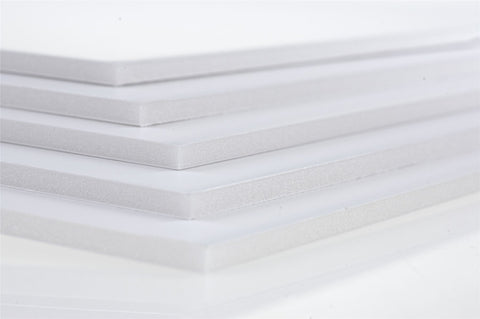
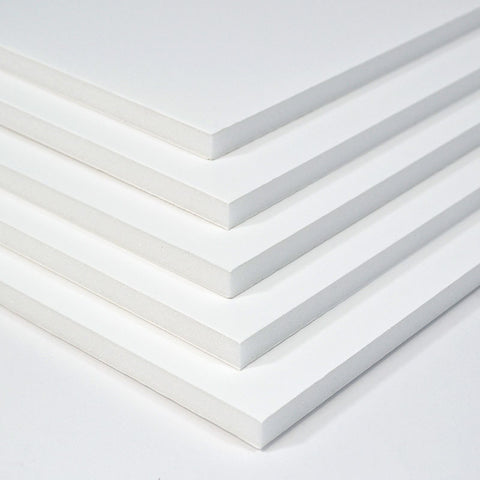
Acid Free Foam Board
On Sale from £204.00 (inc VAT)
Save up to 31%
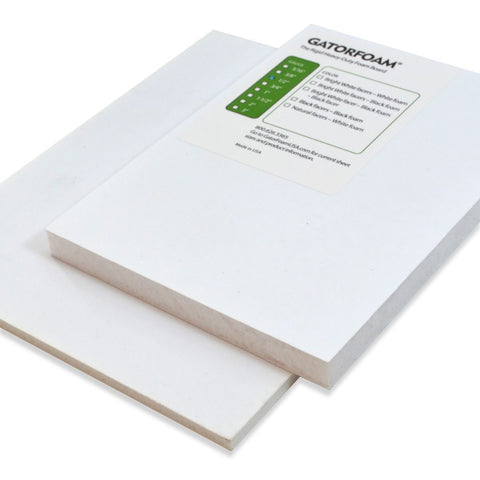
Gilman Brothers White Gatorfoam 5mm Professional Heavy Duty Display Board
On Sale from £1,919.46 (inc VAT)
Save up to 28%

Gilman Brothers Black Gatorfoam 5mm Professional Heavy Duty Display Board
On Sale from £2,106.92 (inc VAT)
Save up to 16%
Foam Board
Professional Grade Foam Board by Gilman Brothers
Foam board is a lightweight yet rigid material used for mounting, display work, signage and model making. At Graphics Direct we supply professional-grade foam board manufactured by Gilman Brothers — trusted across the design and print industries for its consistency, strength and finish.
The quality of foam board has a direct impact on your final result. Lower-quality boards often warp or bend over time, crush or tear when cut, have uneven surfaces and delaminate under pressure. Gilman Brothers Insite foam board provides a smooth, consistent surface, clean precise cutting, improved rigidity and reliable performance for professional applications.
Which Thickness of Foam Board Do I Need?
- 3mm foam board — best for lightweight mounting and short-term display use
- 5mm foam board — the most versatile and popular option for general display, mounting and model work
- 10mm foam board — ideal for large-scale displays, structural applications and architectural models
- Self-adhesive foam board — growing in popularity for professional mounting without spray adhesive
Common Uses for Foam Board
- Mounting prints, photographs and posters
- Exhibition and display graphics
- POS and retail signage
- Architectural and scale models
- Presentation boards and school projects
- Trade show and event graphics
Getting the Best Results
- Use sharp, high-quality blades such as Swann Morton blades — replace frequently
- Cut in multiple light passes rather than one heavy stroke
- Use the correct adhesive for mounting — 3M Spray Mount or Display Mount for most applications, or self-adhesive board for a no-spray option
- Store boards flat in a stable temperature environment to prevent bowing
Foam Board Frequently Asked Questions
What is foam board made of?
Foam board (also called foamcore or foam-centred board) consists of a lightweight polystyrene foam core sandwiched between two thin layers of paper or plastic facing. The facing material determines the board's surface quality and suitability for different applications. Professional-grade boards like Gilman Brothers Insite use a clay-coated paper facing that provides a smooth, bright white surface with excellent ink and adhesive retention — unlike cheaper boards that use uncoated paper which can absorb adhesive unevenly and cause mounting failures.
What is the difference between 3mm, 5mm and 10mm foam board?
The thickness determines the rigidity and weight of the finished mount. 3mm foam board is lightweight and flexible — suitable for small prints, short-term display and applications where weight is a concern. 5mm is the most widely used thickness, offering a good balance of rigidity and weight for most mounting and display applications including large prints, exhibition graphics and presentation boards. 10mm foam board is significantly more rigid and is used for large-scale displays, structural model making and applications where the board needs to stand unsupported or withstand handling.
What is the difference between foam board and Foamex?
Foam board (foamcore) has a polystyrene foam core with paper facing and is designed for indoor use — it is not weatherproof or UV-stable for outdoor applications. Foamex is a rigid PVC-based foam board specifically engineered for outdoor signage — it is weather-resistant, UV-stable and significantly more durable. If you need signage or display for outdoor use, you need Foamex rather than foam board. Our foam board range is for indoor use only.
What is self-adhesive foam board and when should I use it?
Self-adhesive foam board has a peel-and-stick acrylic adhesive coating on one side, covered by a release liner. You peel back the liner and press your print directly onto the board without needing spray adhesive. It gives a cleaner, more consistent bond than spray mounting — particularly useful for large prints where achieving even adhesive coverage with a can is difficult — and eliminates the mess and fumes of spray adhesive. Our self-adhesive foam board is the Gilman Brothers Insite Reveal, which uses a premium acrylic adhesive and is suitable for digital and screen printing as well as hand mounting.
Can foam board be used for printing on directly?
Yes — professional-grade foam board like Gilman Brothers Insite is specifically engineered to accept direct digital and screen printing. The clay-coated facing provides a smooth, dimensionally stable surface with good ink adhesion and colour reproduction. It is widely used in the print and display industry for producing exhibition graphics, POS displays and large-format prints that are rigid and ready to display without additional mounting. Cheaper foam boards with uncoated paper facing are not suitable for direct printing as they absorb ink unevenly.
How do I cut foam board cleanly?
The key to clean foam board cuts is a sharp blade and multiple light passes. Use a fresh Swann Morton or craft knife blade — a dull blade drags and tears the foam core rather than cutting cleanly. Score through the top facing first with light pressure, then make two or three progressively deeper passes to cut through the foam and bottom facing. Always use a steel safety ruler rather than a plastic one. For repeated cuts of the same size, a specialist foam board cutter such as the Cos-Tools range gives superior results — the guided blade tracks consistently through the board thickness giving perfectly perpendicular cuts.
How do I mount a print onto foam board?
For standard foam board, use 3M Spray Mount or Display Mount — apply an even coat to the back of the print rather than the board, allow 20–30 seconds for the adhesive to become tacky, then carefully position the print and smooth from the centre outward to eliminate air bubbles. For best results, peel the print back partially and use a ruler or squeegee to smooth it down section by section. For self-adhesive foam board, score the release liner across the centre, peel back one half to expose the adhesive, anchor the print at the centre and smooth outward before peeling the remaining liner.
What is Gatorfoam and when should I use it instead of standard foam board?
Gatorfoam is a heavy-duty foam board with a wood-fibre veneer facing rather than paper, making it significantly more rigid and durable than standard foam board. It resists denting, warping and delamination under conditions that would damage standard foam board — making it the preferred choice for permanent or semi-permanent display installations, exhibition stands, large-format structural displays and applications where the board will be handled repeatedly. Gatorfoam can also be routed, drilled and machined more cleanly than standard foam board. It is available in 3mm, 5mm and 10mm thicknesses.
What adhesive should I use to mount prints onto foam board?
For most mounting applications, 3M Spray Mount (repositionable) or 3M Display Mount (permanent) are the professional choices. Spray Mount allows repositioning for up to 30 minutes and is ideal when precise alignment is important. Display Mount creates a permanent bond immediately on contact and gives a stronger hold for larger prints or heavier media. For photographs, 3M Photo Mount is specifically formulated to avoid yellowing or chemical damage to photographic paper over time. If you want to eliminate spray adhesive entirely, self-adhesive foam board is the cleanest alternative.
Is foam board recyclable?
Standard foam board with a polystyrene core is not widely recyclable through standard household recycling streams, as the paper facing and foam core need to be separated. However, Oppboga Board — one of the specialist boards we stock — is a fully recyclable foam board alternative, making it the choice for environmentally conscious projects and organisations with sustainability requirements. If recyclability is a priority for your project, contact us on 01423 359 730 and we can advise on the most appropriate board.